Munich’s Frauenkirche, officially the Cathedral of Our Lady, is one of the Bavarian capital’s defining landmarks. Its twin towers and rounded domes rise above the old town, while the spacious Gothic interior offers a quieter setting just a short walk from Marienplatz.
A visit can combine architecture, local legend, and views across Munich from the south tower. It also brings you into an active cathedral, where worship shapes access throughout the day. Whether you have time for a brief look inside or a longer stop with a tower visit, the Frauenkirche fits naturally into a walk through the historic center.
Frauenkirche History: A Gothic Church with Later Domes
Duke Sigismund laid the foundation stone in 1468, and master builder Jörg von Halsbach led the construction of the present church. The main building was completed in 1488, a notably short period for a church of this size.
The familiar tower domes came later. Added around 1525, their rounded profiles give the building much of its distinctive silhouette. Separating these dates helps explain the combination you see today: a large late Gothic brick church crowned by forms that differ from the pointed spires often associated with Gothic architecture.
The cathedral suffered severe damage during the Second World War. Postwar rebuilding restored its role in Munich’s religious and civic life, but the interior should not be understood as an untouched medieval space. Its current appearance reflects both surviving historic material and subsequent restoration.
For a fuller account, the cathedral’s official building history traces the changes that shaped the church over time. Looking at it with those layers in mind makes the contrast between exterior and interior particularly interesting.
The towers rise to roughly 99 meters and remain a strong visual reference across central Munich. Their scale is easiest to appreciate by stepping back into the surrounding streets rather than standing immediately below the façade.
Different approaches reveal different aspects of the building. A distant view emphasizes the paired domes, while a closer look brings out the brickwork and the relationship between the towers and the large body of the church.
The Hall-Church Interior
Inside, tall columns and repeated arches organize the space into a powerful rhythm. Instead of immediately searching for individual artworks, pause near the entrance and let your eye follow the lines toward the eastern end.
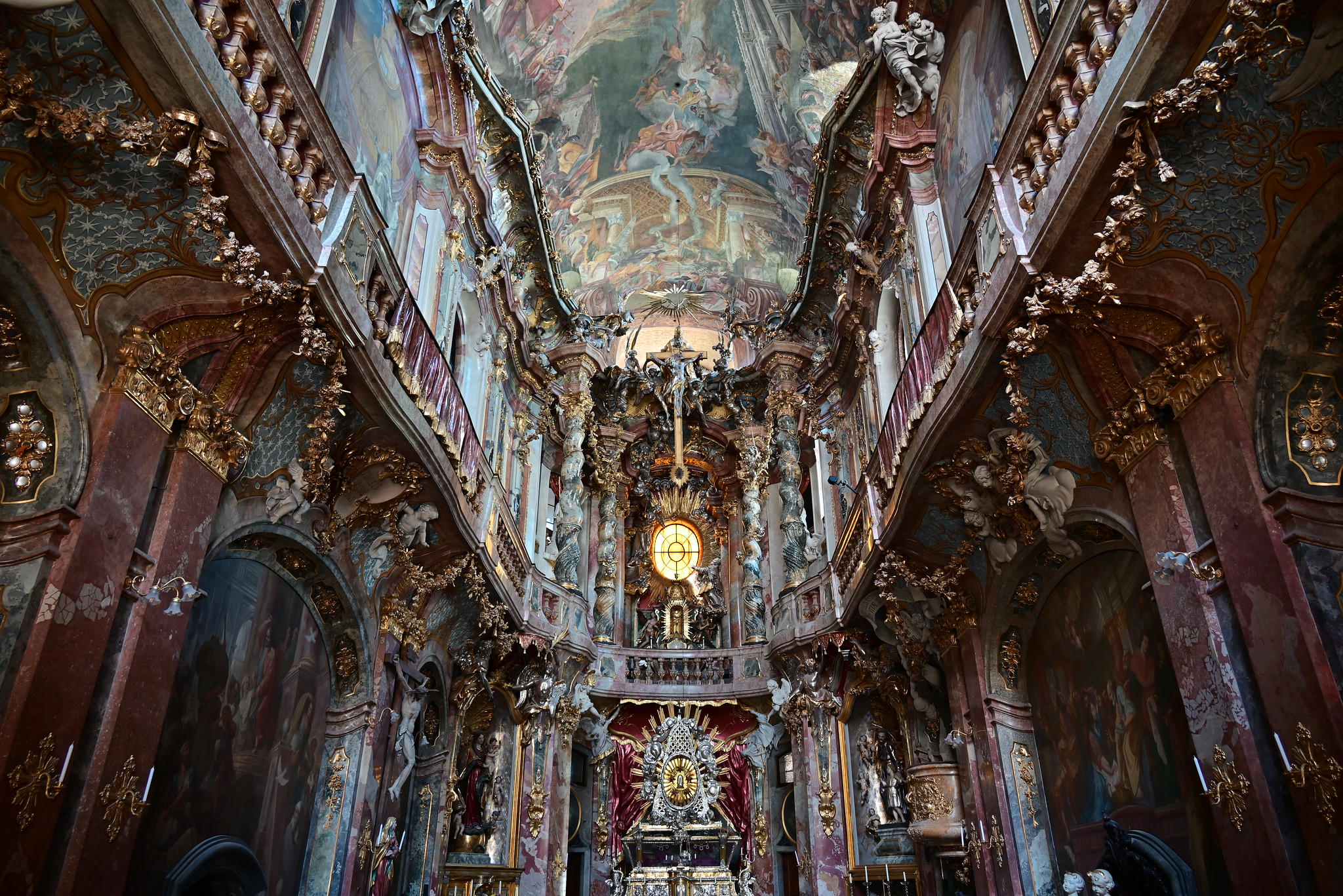
Then move slowly through the accessible areas, noticing how the columns change your view of windows and side spaces. This shifting perspective is part of the architecture’s appeal. The building can feel restrained compared with Bavaria’s more heavily decorated Baroque churches, making proportion and light especially important.
The Devil’s Footprint
The Teufelstritt, or Devil’s Footprint, is a dark mark near the entrance associated with one of Munich’s best-known legends. In a familiar version of the story, the Devil believed the church had been built without windows because the columns concealed them from a particular viewpoint.
When he realized he had been deceived, he stamped his foot in anger. Treat this as local folklore rather than documented construction history, and enjoy the way it encourages visitors to look more closely at the interior’s sightlines.
Emperor Ludwig’s Memorial and the Cathedral’s Living Role
A prominent monument associated with Emperor Ludwig the Bavarian combines dark marble with richly detailed bronze figures. It is a cenotaph, or commemorative monument, and can be seen in the main church near the entrance area. It should not be described simply as a Renaissance tomb hidden in the crypt.
Take time to study its silhouette and sculptural detail. The monument connects the cathedral with the Wittelsbach dynasty and Bavaria’s political history, adding another layer to a building primarily encountered as a place of worship.
The Frauenkirche serves as the cathedral of the Archdiocese of Munich and Freising. Services, prayer, and sacred music remain central to its purpose. Attending a public service can be meaningful if you wish to participate, but sightseeing and photography should wait until worship has finished and visitor access resumes.
Visiting the South Tower
The south tower provides a different perspective on Munich, looking across the old town’s rooftops toward the wider city. On a clear day, the view may extend to the Alps, although haze and cloud can obscure the mountains.
The route combines approximately 90 steps on a narrow spiral staircase with an elevator to the enclosed viewing room. The lift therefore does not provide step-free access from the church floor. The official Munich Tourism booking page identifies the tower visit as unsuitable for barrier-free access and notes the confined staircase.
Entry is through the Domshop inside the cathedral. Visitor numbers are controlled, and the staircase operates in one-way phases, so a ticket may still involve a wait. Allow flexibility rather than placing another tightly timed reservation immediately afterward.
The sheltered viewing room makes the experience less exposed than an open rooftop terrace. Visibility still matters, however, so choose clearer conditions when possible if the panorama is your main reason for going up.
Opening Hours and Admission
Main Cathedral
The cathedral currently lists daily opening from 8:00 AM to 8:00 PM. Ordinary entry to the main church is free. Sightseeing is not permitted during services or their admission periods, so these opening hours do not mean uninterrupted tourist access.
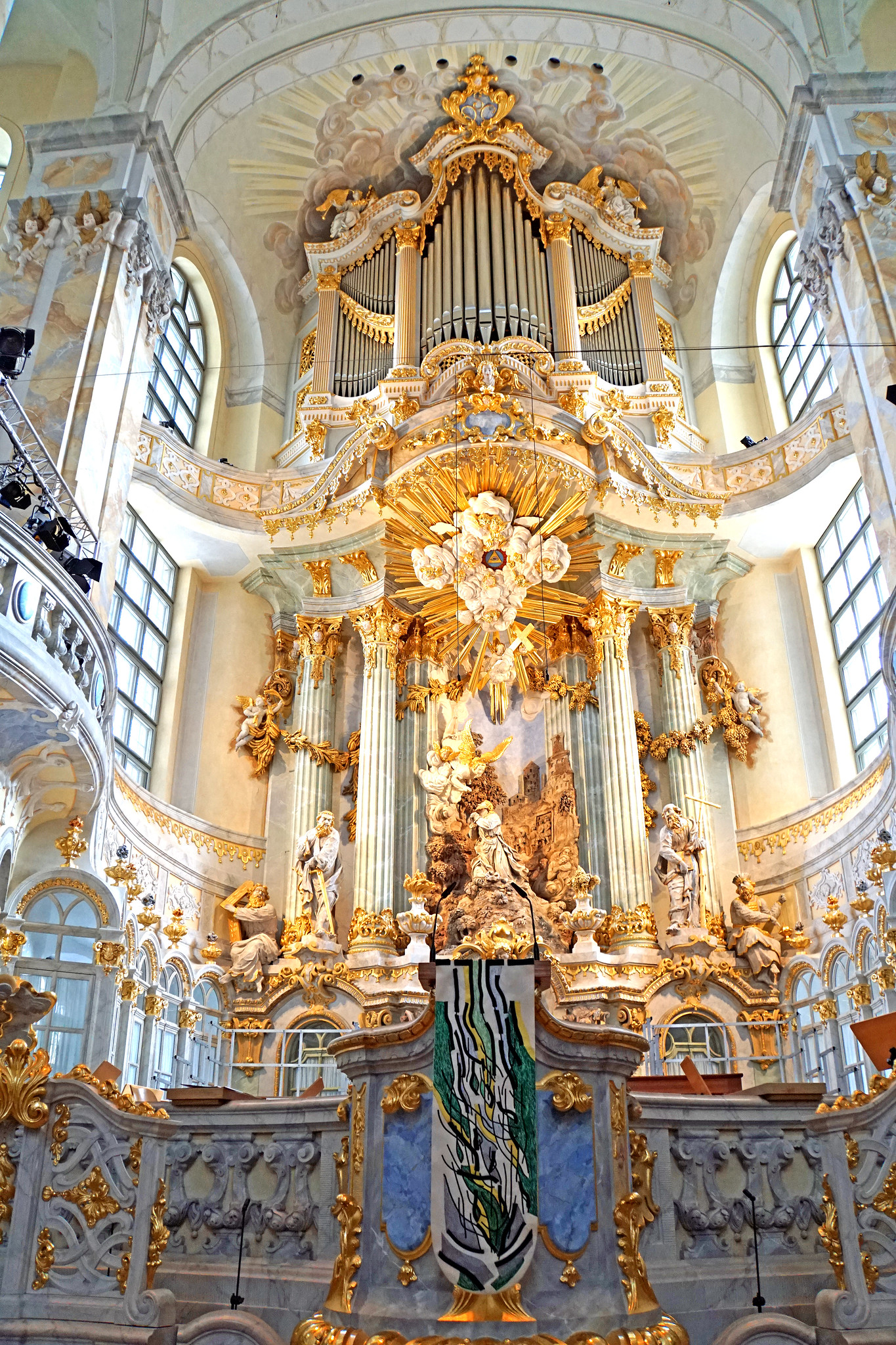
Consult the official Munich Cathedral website and its calendar before arriving. This is the Frauenkirche in Munich; the similarly named church in Dresden is a separate landmark.
South Tower Hours and Prices
The current tower schedule is Monday–Saturday, 10:00 AM–5:00 PM, and Sundays and public holidays, 11:30 AM–5:00 PM. Last ascent is at 4:30 PM.
Published admission is €7.50 for adults and €5.50 for children aged 7–16. Children aged six and under enter free. The cathedral also lists reduced and family tickets. Check eligibility and the amount payable through the official opening-hours and ticket information.
Holiday schedules and special services can affect tower operation. Check your exact date, particularly around Christmas and New Year, rather than relying only on the usual weekly timetable.
Planning a Comfortable Visit
The cathedral stands at Frauenplatz in Munich’s old town, close to Marienplatz. Public transport to the city center followed by a short walk is a convenient approach; check current routes from your accommodation.
As a planning suggestion, allow roughly 30–45 minutes for an unhurried look inside, with additional time for the tower and any queue. You may prefer a shorter stop or a longer visit depending on your interest in architecture, art, and the view.
Wear comfortable shoes: These help on the surrounding streets and are especially useful for the spiral staircase.
Check access needs separately: Main-church access and tower access are different. Contact the cathedral about your specific requirements before traveling.
Respect prayer: Speak quietly, silence your phone, and follow signs around areas reserved for worship.
Ask about photography: Follow current instructions and avoid photographing services or individual worshippers without permission.
Look for guided visits: Check the current program, language, booking requirements, and scope rather than assuming a tour departs whenever you arrive.
Keep the day flexible: A service or tower queue can change the order of your plans without spoiling a walk through the old town.
Explore the Surrounding Old Town
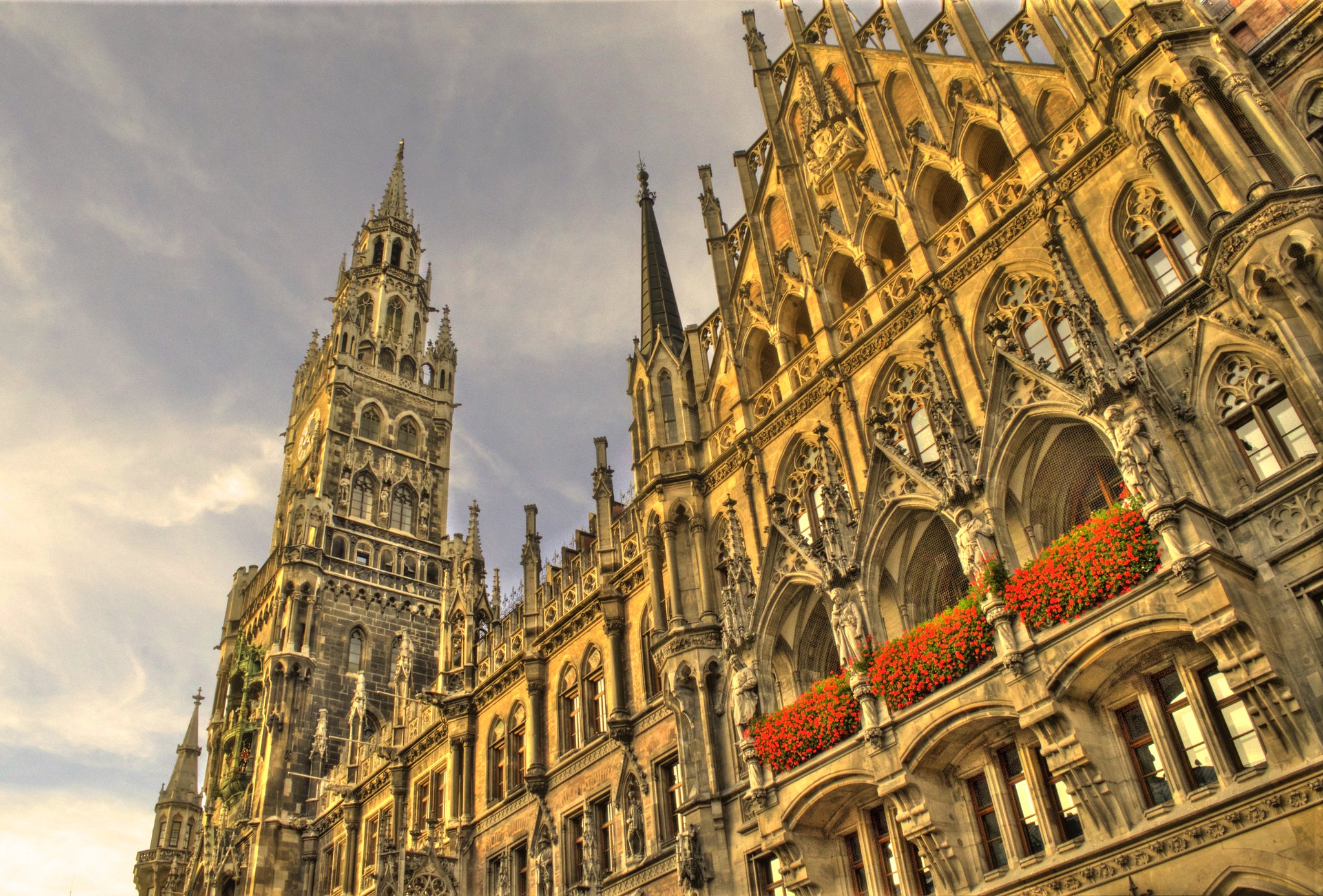
Marienplatz makes an easy next stop, with the New Town Hall providing a different architectural contrast to the cathedral. Continue toward Viktualienmarkt for a break and a sense of Munich’s everyday food culture.
You can also use the towers as a visual reference while walking through nearby streets. Seeing the domes reappear between buildings helps connect the interior visit with the broader cityscape.
For travelers exploring Munich and Germany, the Frauenkirche offers a rewarding combination of local identity, religious continuity, and architectural history. Take time for the main church, choose the tower if its access route suits you, and leave room to enjoy the streets around it.
Have you visited Munich’s Frauenkirche? Share your impressions or favorite details in the comments below!
Have you visited this place before? Share and rate your experiences!
We'd love to hear your ratings and opinions in the comments below. Your feedback will help others too.
Average rating / 5. Vote count:
No votes so far! Be the first to rate this place.
As you found this post useful...
Follow us on social media!
We're sorry to hear that your experience wasn't great
Allow location access and we'll show you tours,
attractions and activities nearby.
◎
Discover what's around you
Use your current location to find the closest
Kenzly experiences.
Nearby experiences
Manage Consent
To provide the best experiences, we use technologies like cookies to store and/or access device information. Consenting to these technologies will allow us to process data such as browsing behavior or unique IDs on this site. Not consenting or withdrawing consent, may adversely affect certain features and functions.
Functional
Always active
The technical storage or access is strictly necessary for the legitimate purpose of enabling the use of a specific service explicitly requested by the subscriber or user, or for the sole purpose of carrying out the transmission of a communication over an electronic communications network.
Preferences
The technical storage or access is necessary for the legitimate purpose of storing preferences that are not requested by the subscriber or user.
Statistics
The technical storage or access that is used exclusively for statistical purposes.The technical storage or access that is used exclusively for anonymous statistical purposes. Without a subpoena, voluntary compliance on the part of your Internet Service Provider, or additional records from a third party, information stored or retrieved for this purpose alone cannot usually be used to identify you.
Marketing
The technical storage or access is required to create user profiles to send advertising, or to track the user on a website or across several websites for similar marketing purposes.









0 Comment